Thursday, April 8, 2010

Taxon of the Day! (8 April 2010)

Layia platyglossa - Tidy Tips
Lovely! This little aster (short for Asteraceae, the sunflower Family) is one of the Carrizo's most famous denizens.

For those who don't know, the "flowers" produced by many members of the Asteraceae (including sunflowers, chrysanthemums, dahlias, and gerberas) are actually made up of many smaller flowers. In the above photo, each tiny star-shaped part in the center is a flower in itself (the disc flowers), and each petal around the outside is of a second, highly asymmetrical type (the ray flowers). The composite nature of the inflorescence inspired an earlier name for the Asteraceae - the Compositae. To this day, many older taxonomists refer to them collectively as 'composites'.                                                        
The family contains a staggering number of species worldwide (23,000 according to the Kew Botanical Gardens), representing succulents, trees, shrubs, annuals, and many commercially important and familiar species (artichokes, thistles, and dandelions in addition to the ones already mentioned).

Layia is named in honor of George Tradescant Lay, a sailor and doctor/scientist on (fittingly) the HMS Blossom. On his 1841 trip to China, Lay wrote this about opium addicts:

"This great metropolis has a choice of wretched and degraded sights, but nothing that I ever see reminds me of an opium-smoker. His lank and shrivelled limbs, tottering gait, sallow visage, feeble voice, and the death-boding glance of his eye, are so superlative in their degree, and so closely blended in their union, that they at once bespeak him to be the most forlorn creature that treads upon the ground."

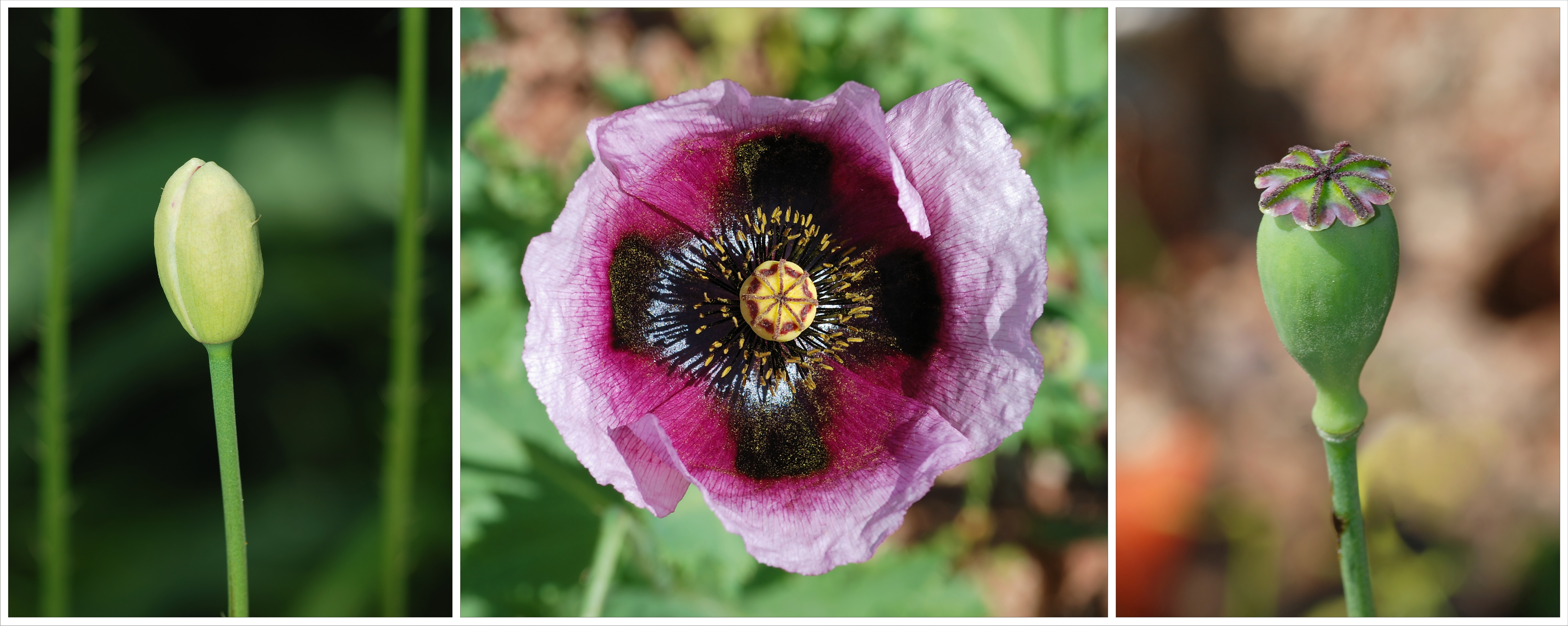
All of that, the fallout from fiddling with the milky secretions of another attractive wildflower in the Papaveraceae (poppy family): Papaver somniferum.

Tidy tips form really nice pale-yellow blotches on the landscape that can be difficult to pick out from the seas of darker yellow Goldfields (Lasthenia, another Aster) around them:                                               

Wednesday, April 7, 2010

The hegemony of oxygen falters...

Complexity freed from the Tyrannical Free Radical!

Taxon of the Day! (7 April 2010)

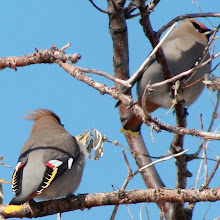
Amphispiza belli - Sage Sparrow
Although seen here perched in the scaly needles of Juniperus californica, the distribution of Sage Sparrows is tightly linked to the occurrence of their namesake plant: sagebrush (Artemisia tridentata).

Consequently, the best place to find Sage Sparrows is in the arid strip of land passing through the Great Basin, west of the Rockies and east of the Cascades, all the way down to northern Mexico.

There is some fear that Sage Sparrow populations will suffer as native sagebrush habitat is cleared and/or degraded. However, they are still listed as a species of least concern by the IUCN.

This species is named after John Graham Bell, an American taxodermist... and spoon collector. My best efforts to find any of his spoons for sale have been rebuffed.

Tuesday, April 6, 2010

Wow! New mega-macrovertebrate discovered.

It's a  Frugivorous Tree-Dragon in the genus Varanus, from Luzon, the Phillipines.

Taxon of the Day! (6 April 2010)

Castilleja exserta (formerly Orthocarpus purpurascens)  Owl's Clover
This pretty plant is not a true clover at all, but rather a member of the Scrophulariaceae (Figwort Family). It's named for the somewhat owlish appearance of the pale flowers with dark "eyes" (one is clearly visible in the above photo). The surrounding pinkish/magenta appendages are bracts, not flowers.

A number of folks have told me that upon seeing fully-flowered plants while in various states of mental alteration, they've been deeply creeped out by what appeared to them to be masses of tiny, perpetually staring owls swaying in the wind. 

Perhaps my favorite natural history tidbit regarding this species has to do with its nutritional strategy. This is no ordinary plant, my friends. No, this is a hemiparasite. Which is to say, C. exserta steals resources from nearby plants by producing haustoria (long appendages that penetrate deeply into other roots, and serve as surfaces for nutrient uptake). Fungi also produce haustoria, as do Rafflesia plants.

And to think! They just sit there, looking pretty and innocent on the landscape:
                                    

Monday, April 5, 2010

Taxon of the Day! (5 April 2010)

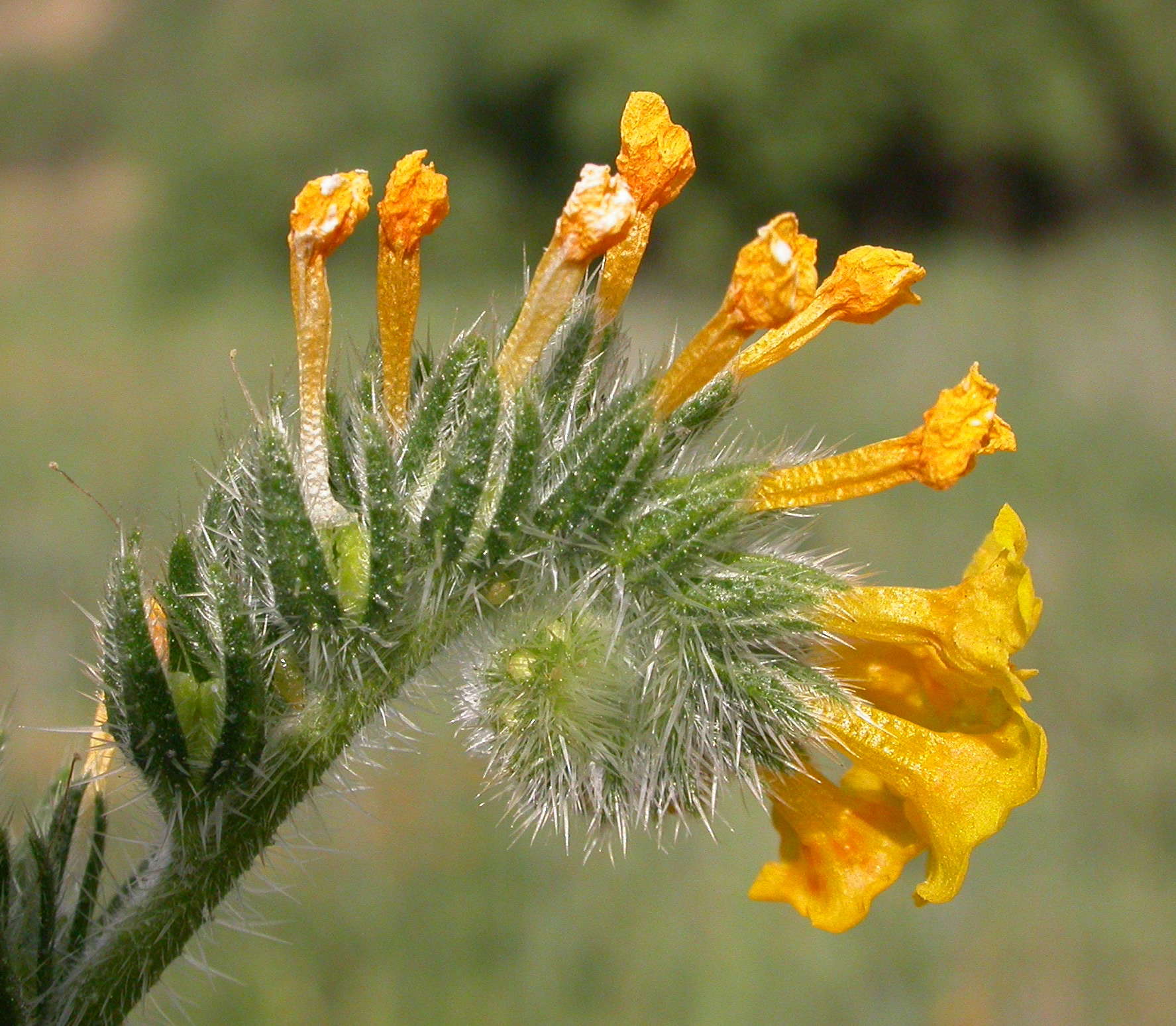
Amsinckia menziesii     "Fiddlenecks"
This Western North American member of (you guessed it) the Boraginaceae, is named after the shape of its inflorescence (the collection of flowers). This photo illustrates it nicely: scorpioid cyme

But it turns out that many, many members of the Boraginaceae share this same delightful scorpion-tail arrangement, which in botanical nomenclature is called a scorpioid cyme (or cincinnus). 'Cymes' are a kind of inflorescence that don't continue to grow flowers indefinitely (thus, they are determinate). Scorpioid refers to the rather photogenic coiling of the inflorescence (like a scorpion's tail). 

For the longest time, taxonomists couldn't decide whether to call these helicoid or scorpioid cymes (meanwhile, life went on), but in a 2003 article, Matt Buys and Hartmut Hilger came to the rescue and decided that they're all scorpioid (maybe they're just 80s-metal fans).

At the Carrizo Plain two weekends ago, Amsinckia menziesii was very common on the landscape, forming colonies of moderate density that showed up as dull orange patches (the foliage is fairly dark green). It struck me that plants ranged from near a meter tall to just a few inches high, apparently depending on the growing conditions. Perhaps this ability to tolerate a wide variety of environmental conditions has facilitated their invasion of eastern Australia.  Here is a relatively isolated clump of tallish fiddlenecks:
The species epithet refers to Archibald Menzies, Scottish naturalist extraordinare. 

Fiddleneck seeds provide an important food source to the indisputably attractive Lawrence's Goldfinch. I saw four of these handsome little devils during my brief stay, foraging a small patch of none other than... Amsinckia menziesii.

Sunday, April 4, 2010

Taxon of the Day! (4 April 2010)

Phacelia tanacetifolia  "Lacy Phacelia"
Another member of the Boraginaceae, this spiny but beautiful Phacelia packs multiple tightly curled scorpioid inflorescences into a semi-globular head. Last weekend at the Carrizo Plain, this species was less frequent than the Lacy Phacelia (a darker purple congener), instead appearing in dense, contiguous, rather local colonies at the Carrizo Plain. 
                                        
Like many Phacelia, the spines can cause contact dermatitis in sensitive individuals. I didn't have any problems touching it. Does anyone know if spines in the Boraginaceae are purely mechanical irritants, or if they are filled with serotonin and histamines like in some Urticaceae (nettles)?

There is some interest in using this species as a companion species for tomatoes, because it attracts lots of pollinators, primarily bumble- and honey- bees, as well as syrphid flies. 

Here's a great shot of the seeds, from Steve Hurst at the USDA PLANTS database:
                                    
Happy Easter!